Friday, July 15, 2005

Saturday Poetry


Raymond Chandler, 1888 - 1959

"Red Wind"

There was a desert wind blowing that night. It was one of those hot dry Santa Anas that come down through the mountain passes and curl your hair and make your nerves jump and your skin itch. On nights like that every booze party ends in a fight. Meek little wives feel the edge of the carving knife and study their husbands' necks. Anything can happen. You can even get a full glass of beer at a cocktail lounge.

Saturday Poetry

Saturday, June 18, 2005

Saturday Poetry


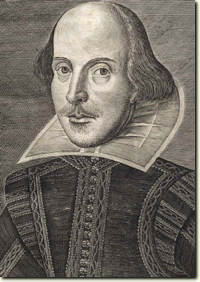
William Shakespeare, 1564 - 1616

"The Taming of the Shrew"


PETRUCHIO
Marry, so I mean, sweet Katharina, in thy bed:
And therefore, setting all this chat aside,
Thus in plain terms: your father hath consented
That you shall be my wife; your dowry 'greed on;
And, Will you, nill you, I will marry you.
Now, Kate, I am a husband for your turn;
For, by this light, whereby I see thy beauty,
Thy beauty, that doth make me like thee well,
Thou must be married to no man but me;
For I am he am born to tame you Kate,
And bring you from a wild Kate to a Kate
Conformable as other household Kates.
Here comes your father: never make denial;
I must and will have Katharina to my wife.

Re-enter BAPTISTA, GREMIO, and TRANIO

PETRUCHIO
Father, 'tis thus: yourself and all the world,
That talk'd of her, have talk'd amiss of her:
If she be curst, it is for policy,
For she's not froward, but modest as the dove;
She is not hot, but temperate as the morn;
For patience she will prove a second Grissel,
And Roman Lucrece for her chastity:
And to conclude, we have 'greed so well together,
That upon Sunday is the wedding-day.

KATHARINA
I'll see thee hang'd on Sunday first.

PETRUCHIO
Be patient, gentlemen; I choose her for myself:
If she and I be pleased, what's that to you?
'Tis bargain'd 'twixt us twain, being alone,
That she shall still be curst in company.
I tell you, 'tis incredible to believe
How much she loves me: O, the kindest Kate!
She hung about my neck; and kiss on kiss
She vied so fast, protesting oath on oath,
That in a twink she won me to her love.
O, you are novices! 'tis a world to see,
How tame, when men and women are alone,
A meacock wretch can make the curstest shrew.
Give me thy hand, Kate: I will unto Venice,
To buy apparel 'gainst the wedding-day.
Provide the feast, father, and bid the guests;
I will be sure my Katharina shall be fine.

BAPTISTA
I know not what to say: but give me your hands;
God send you joy, Petruchio! 'tis a match.

GREMIO TRANIO
Amen, say we: we will be witnesses.

PETRUCHIO
Father, and wife, and gentlemen, adieu;
I will to Venice; Sunday comes apace:
We will have rings and things and fine array;
And kiss me, Kate, we will be married o'Sunday.

(In honor of my friends Kate and John, marrying today!)

Saturday Poetry

Wednesday, June 15, 2005

Interesting .22 Pistols

I've got one .22 pistol, a Taurus 94 revolver (4" barrel, 9-shot cylinder, blued frame) and I like shooting it. Browsing through a recent purchase, "Pistols of the World", 4th edition, Hogg and Walter, I was looking for interesting .22 pistols.

Vis a vis styling, a revolver is a revolver and not much changes from manufacturer to manfacturer. Ah, but the autoloaders can be much more interesting...

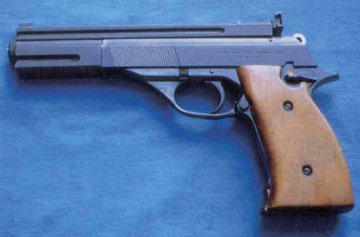
I like the look of the Astra TS-22, a well-made inexpensive target pistol:


Alas, none are to be found on the web for sale (Auction Arms, Gun Broker, Guns America, GunsLocal).

Guns

Politics: AB 352, SB 357

I wanted to write something about these bills and their respective sponsors (Koretz, Dunn / Perata), but they're all a bunch of lying fucks and I just can't face browsing through their records.

Saturday, June 11, 2005

Saturday Poetry


Robert W. Service
Jan. 16, 1874 - Sept. 11, 1958

"Birthday"

(16th January 1949)

I thank whatever gods may be
For all the happiness that's mine;
That I am festive, fit and free
To savour women, wit and wine;
That I may game of golf enjoy,
And have a formidable drive:
In short, that I'm a gay old boy
Though I be
Seventy-and-five.

My daughter thinks. because I'm old
(I'm not a crock, when all is said),
I mustn't let my feet get cold,
And should wear woollen socks in bed;
A worsted night-cap too, forsooth!
To humour her I won't contrive:
A man is in his second youth
When he is
Seventy-and-five.

At four-score years old age begins,
And not till then, I warn my wife;
At eighty I'll recant my sins,
And live a staid and sober life.
But meantime let me whoop it up,
And tell the world that I'm alive:
Fill to the brim the bubbly cup -
Here's health to
Seventy-and-five!

Saturday Poetry

Monday, May 30, 2005

Memorial Day

From US Memorial Day.org

Memorial Day, originally called Decoration Day, is a day of remembrance for those who have died in our nation's service. There are many stories as to its actual beginnings, with over two dozen cities and towns laying claim to being the birthplace of Memorial Day. There is also evidence that organized women's groups in the South were decorating graves before the end of the Civil War: a hymn published in 1867, "Kneel Where Our Loves are Sleeping" by Nella L. Sweet carried the dedication "To The Ladies of the South who are Decorating the Graves of the Confederate Dead" (Source: Duke University's Historic American Sheet Music, 1850-1920). While Waterloo N.Y. was officially declared the birthplace of Memorial Day by President Lyndon Johnson in May 1966, it's difficult to prove conclusively the origins of the day. It is more likely that it had many separate beginnings; each of those towns and every planned or spontaneous gathering of people to honor the war dead in the 1860's tapped into the general human need to honor our dead, each contributed honorably to the growing movement that culminated in Gen Logan giving his official proclamation in 1868. It is not important who was the very first, what is important is that Memorial Day was established. Memorial Day is not about division. It is about reconciliation; it is about coming together to honor those who gave their all.

Memorial Day was officially proclaimed on 5 May 1868 by General John Logan, national commander of the Grand Army of the Republic, in his General Order No. 11, and was first observed on 30 May 1868, when flowers were placed on the graves of Union and Confederate soldiers at Arlington National Cemetery. The first state to officially recognize the holiday was New York in 1873. By 1890 it was recognized by all of the northern states. The South refused to acknowledge the day, honoring their dead on separate days until after World War I (when the holiday changed from honoring just those who died fighting in the Civil War to honoring Americans who died fighting in any war). It is now celebrated in almost every State on the last Monday in May (passed by Congress with the National Holiday Act of 1971 (P.L. 90 - 363) to ensure a three day weekend for Federal holidays), though several southern states have an additional separate day for honoring the Confederate war dead: January 19 in Texas, April 26 in Alabama, Florida, Georgia, and Mississippi; May 10 in South Carolina; and June 3 (Jefferson Davis' birthday) in Louisiana and Tennessee.

Also from US Memorial Day.org

HEADQUARTERS GRAND ARMY OF THE REPUBLIC
General Orders No.11, WASHINGTON, D.C., May 5, 1868

The 30th day of May, 1868, is designated for the purpose of strewing with flowers or otherwise decorating the graves of comrades who died in defense of their country during the late rebellion, and whose bodies now lie in almost every city, village, and hamlet church-yard in the land. In this observance no form of ceremony is prescribed, but posts and comrades will in their own way arrange such fitting services and testimonials of respect as circumstances may permit.

We are organized, comrades, as our regulations tell us, for the purpose among other things, "of preserving and strengthening those kind and fraternal feelings which have bound together the soldiers, sailors, and marines who united to suppress the late rebellion." What can aid more to assure this result than cherishing tenderly the memory of our heroic dead, who made their breasts a barricade between our country and its foes? Their soldier lives were the reveille of freedom to a race in chains, and their deaths the tattoo of rebellious tyranny in arms. We should guard their graves with sacred vigilance. All that the consecrated wealth and taste of the nation can add to their adornment and security is but a fitting tribute to the memory of her slain defenders. Let no wanton foot tread rudely on such hallowed grounds. Let pleasant paths invite the coming and going of reverent visitors and fond mourners. Let no vandalism of avarice or neglect, no ravages of time testify to the present or to the coming generations that we have forgotten as a people the cost of a free and undivided republic.

If other eyes grow dull, other hands slack, and other hearts cold in the solemn trust, ours shall keep it well as long as the light and warmth of life remain to us.

Let us, then, at the time appointed gather around their sacred remains and garland the passionless mounds above them with the choicest flowers of spring-time; let us raise above them the dear old flag they saved from dishonor; let us in this solemn presence renew our pledges to aid and assist those whom they have left among us a sacred charge upon a nation's gratitude, the soldier's and sailor's widow and orphan.

It is the purpose of the Commander-in-Chief to inaugurate this observance with the hope that it will be kept up from year to year, while a survivor of the war remains to honor the memory of his departed comrades. He earnestly desires the public press to lend its friendly aid in bringing to the notice of comrades in all parts of the country in time for simultaneous compliance therewith.

Department commanders will use efforts to make this order effective.

By order of

JOHN A. LOGAN,
Commander-in-Chief

N.P. CHIPMAN,
Adjutant General

Official:
WM. T. COLLINS, A.A.G.

Sunday, May 29, 2005

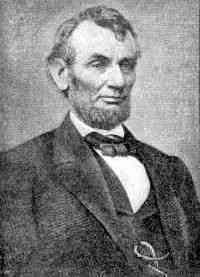
The Gettysburg Address


The Gettysburg Address
Gettysburg, Pennsylvania
November 19, 1863

Four score and seven years ago our fathers brought forth on this continent, a new nation, conceived in Liberty, and dedicated to the proposition that all men are created equal.

Now we are engaged in a great civil war, testing whether that nation, or any nation so conceived and so dedicated, can long endure. We are met on a great battle-field of that war. We have come to dedicate a portion of that field, as a final resting place for those who here gave their lives that the nation might live. It is altogether fitting and proper that we should do this.

But, in a larger sense, we can not dedicate -- we can not consecrate -- we can not hallow -- this ground. The brave men, living and dead, who struggled here, have consecrated it, far above our poor power to add or detract. The world will little note, nor long remember what we say here, but it can never forget what they did here. It is for us the living, rather, to be dedicated here to the unfinished work which they who fought here have thus far so nobly advanced. It is rather for us to be here dedicated to the great task remaining before us -- that from these honored dead we take increased devotion to that cause for which they gave the last full measure of devotion -- that we here highly resolve that these dead shall not have died in vain -- that this nation, under God, shall have a new birth of freedom -- and that government of the people, by the people, for the people, shall not perish from the earth.

Saturday, April 02, 2005

Saturday Poetry


A.R. Ammons (1926 - 2001)

When I Was Young The Silk

When I was young the silk
of my mind
hard as a peony head
unfurled
and wind bloomed the parachute:

The air-head tugged me
up,
tore my roots loose and drove
high, so high

I want to touch down now
and taste the ground
I want to take in
my silk
and ask where I am
before it is too late to know

Saturday Poetry

Saturday, March 26, 2005

Saturday Poetry


Unknown, possibly G. K. Chesterton? (1874 - 1936)

Which Are You?

I watched them tearing a building down,
A gang of men in a busy town;
With a ho-heave-ho and a lusty yell
They swung a beam and the sidewall fell.
I asked the foreman: "Are these men skilled,
And the men you'd hire if you had to build?"
He gave a laugh and said: "No indeed!
Just common labor is all I need.
I can easily wreck in a day or two
What builders have taken a year to do!"

And I thought to myself as I went my way,
Which of these roles have I tried to play?
Am I a builder who works with care,
Measuring life by the rule and square?
Am I shaping my deeds to a well-made plan,
Patiently doing the best I can?
Or am I a wrecker, who walks the town,
Content with the labor of tearing down.

Saturday Poetry

Tuesday, March 22, 2005

Saturday Poetry

Thomas Nashe (1567-1601)

Spring, the sweet spring

Spring, the sweet spring, is the year's pleasant king,
Then blooms each thing, then maids dance in a ring,
Cold doth not sting, the pretty birds do sing:
Cuckoo, jug-jug, pu-we, to-witta-woo!

The palm and may make country houses gay,
Lambs frisk and play, the shepherds pipe all day,
And we hear aye birds tune this merry lay:
Cuckoo, jug-jug, pu-we, to-witta-woo!

The fields breathe sweet, the daisies kiss our feet,
Young lovers meet, old wives a-sunning sit,
In every street these tunes our ears do greet:
Cuckoo, jug-jug, pu-we, to witta-woo!

Saturday Poetry

Saturday, March 12, 2005

Saturday Poetry


William Allingham, 1824 - 1889

A Gravestone

Far from the churchyard dig his grave,
On some green mound beside the wave;
To westward, sea and sky alone,
And sunsets. Put a mossy stone,
With mortal name and date, a harp
And bunch of wild flowers, carven sharp;
Then leave it free to winds that blow,
And patient mosses creeping; slow,
And wandering wings, and footsteps rare
Of human creature pausing there.

Saturday Poetry

Monday, March 07, 2005

The First Pope


Pope Peter, 32 - 67

From The Catholic Encyclopedia:

The Risen Lord confirms Peter's precedence.

In spite of this weakness, his position as head of the Apostles was later confirmed by Jesus, and his precedence was not less conspicuous after the Resurrection than before. The women, who were the first to find Christ's tomb empty, received from the angel a special message for Peter (Mark 16:7). To him alone of the Apostles did Christ appear on the first day after the Resurrection (Luke 24:34; I Corinthians 15:5). But, most important of all, when He appeared at the Lake of Genesareth, Christ renewed to Peter His special commission to feed and defend His flock, after Peter had thrice affirmed his special love for his Master (John, xxi, 15-17). In conclusion Christ foretold the violent death Peter would have to suffer, and thus invited him to follow Him in a special manner (ibid., 20-23). Thus was Peter called and trained for the Apostleship and clothed with the primacy of the Apostles, which he exercised in a most unequivocal manner after Christ's Ascension into Heaven.

Saturday, March 05, 2005

Saturday Poetry


Richard Lovelace, 1618 - 1658

To Lucasta, on Going to the Wars

Tell me not, Sweet, I am unkind
That from the nunnery
Of thy chaste breast and quiet mind,
To war and arms I fly.

True, a new mistress now I chase,
The first foe in the field;
And with a stronger faith embrace
A sword, a horse, a shield.

Yet this inconstancy is such
As you too shall adore;
I could not love thee, Dear, so much,
Loved I not Honour more.

Saturday Poetry

Monday, February 28, 2005

LA County Gunstores: Wimpey's Pawn, Azusa

I drove out to Azusa the other day to look over the range where I'm taking a class soon (Burro Canyon Shooting Park), and on my up to the site I saw Wimpey's Pawn Shop.

A pawn shop, how interesting--oh, wait, they've got a sign in the window: Guns. screech

Wimpey's is a fairly typical pawn shop, with long counters of the expensive, pricey stuff (watches, rings, cameras, lenses, et cetera) under glass, band instruments on the wall and all the way in the back, guns.

Rifles and shotguns are racked neatly on the wall, handguns are in the display cases. Since I like older guns (new is new, anywhere you go) I zeroed in on the used revolvers. There were two that caught my eye: A Taurus 66 in .357, and a Colt Police Positive in .22.

The Taurus looked well-cared for, but the hammer spring felt really light when I cocked it. Huh.

The Colt was a small-frame (i.e., small grip) revolver with a 6" barrel, and it had not been well-cared for. The muzzle crown was dinged, and the barrel and frame were lightly speckled with rust. The frame screw on the right side was not just buggered, it was dead--half of the head was sheared away, leaving only a miniscule remnant of channel.

The grips seemed to be original (hard rubber?) and the action seemed in good condition (hammer cocked fine in single-action, no cylinder shake, extractor rod moved smoothly).

But for $340, I am not bringing this puppy home.

I'm not, I'm not, I'm not...

The other interesting gun on the back wall was an $80 rifle labeled "New England Westinghouse Company 1915 II". I asked about it, they didn't really know what it was. When I got home, I tried looking it up in my reference books, but no luck.

Googled "Westinghouse rifle" yesterday, found out it's most likely a Model 91 Mosin (7.62 x 54) made 1915-1917 for the Russian government (two contracts were awarded, one to Remington, the other to the above company, which was manufacturing weapons during WWI).

Huh--an American-made Mosin for $80.

Wimpey's Pawn Shop
650 N. Azusa Avenue
Azusa, CA 91702
626 334 9758

Saturday, February 26, 2005

Saturday Poetry


Max Eastman, 1883 - 1969

At the Aquarium

Serene the silver fishes glide,
Stern-lipped, and pale, and wonder-eyed!
As through the aged deeps of ocean,
They glide with wan and wavy motion.
They have no pathway where they go,
They flow like water to and fro,
They watch with never-winking eyes,
They watch with staring, cold surprise,
The level people in the air,
The people peering, peering there:
Who wander also to and fro,
And know not why or where they go,
Yet have a wonder in their eyes,
Sometimes a pale and cold surprise.

Saturday Poetry

Friday, February 25, 2005

John Farnam: Farnam's Quips

From Farnam's Quips for February 11:

"Once again, I encouraged them to carry pistols (and blades) always, concealed if necessary, any time they find themselves in dangerous places, worrying less about "propriety" and more about personal victory. I reminded them that the routine carrying of pistols conveys to the carrier a firm sense of purpose and of nobility and that the daily handling of dangerous weapons reinforces correct habits."

Guns

Thursday, February 24, 2005

Kim du Toit: GWB in Euroland

Kim describes the American style of diplomacy:

"Our diplomacy model, thanks to the GWB / Cheney / Halliburton / VRWC junta, is talk-talk-talk, failure, USMC/daisycutters."

Heh, heh, heh...

Wednesday, February 23, 2005

Capitalist Lion dot com: Gagging on the Socialist Pill

Capitalist Lion dot com

Mr. Lion writes about "...grabastic pieces of socialist goop...", specifically socialists trying to convince (guilt) everybody else to feel horrible about America being more successful than any other country in the world:

"Our country was created with the freedome for the lowest bump on the social stick to reach the top, prevented by absolutely nothing save his own ambition."

"Second, there is nothing special or exclusive about the American way of life."

RTWT.

Friday, February 18, 2005

Saturday Poetry


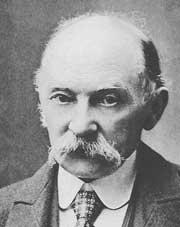
Thomas Hardy (1840-1928)

"When I Set Out for Lyonnesse"

When I set out for Lyonnesse,
A hundred miles away,
The rime was on the spray,
And starlight lit my lonesomeness
When I set out for Lyonnesse
A hundred miles away.

What would bechance at Lyonnesse
While I should sojourn there
No prophet durst declare,
Nor did the wisest wizard guess
What would bechance at Lyonnesse
While I should sojourn there.

When I came back from Lyonnesse
With magic in my eyes,
All marked with mute surmise
My radiance rare and fathomless,
When I came back from Lyonnesse
With magic in my eyes!

Saturday Poetry

Saturday, February 12, 2005

Saturday Poetry


Paul Laurence Dunbar, 1872 - 1904

The Debt

This is the debt I pay
Just for one riotous day,
Years of regret and grief,
Sorrow without relief.

Pay it I will to the end --
Until the grave, my friend,
Gives me a true release --
Gives me the clasp of peace.

Slight was the thing I bought,
Small was the debt I thought,
Poor was the loan at best --
God! but the interest!

Saturday Poetry